What Is Vietnamese Cinnamon? Origin, Characteristics & Trade Use
Vietnamese cinnamon, predominantly of the Cinnamomum loureiroi species and widely traded as Saigon Cinnamon, is a premium variety of cassia renowned for its intense aroma, sweet-spicy flavor, and thick bark. It is a cornerstone ingredient for global food manufacturing and bulk spice trade.
For importers, distributors, and food brands, understanding its unique profile, regional origins, and commercial applications is key to making informed sourcing decisions and securing a competitive advantage.
1. Understanding Vietnamese Cinnamon: A Trade Perspective
Vietnamese cinnamon is a key variant within the broader cassia family (Cinnamomum cassia), distinct from the milder “true cinnamon” (Cinnamomum verum) originating from Sri Lanka. Its commercial name, “Saigon Cinnamon,” harks back to the historical export hub of Ho Chi Minh City (Saigon).
Vietnam has risen to become a leading global producer, supported by ideal climatic conditions, generations of cultivation expertise, and a mature export infrastructure. This makes it a reliable and scalable source for international buyers requiring consistent, high-volume supply.
Internal Link: Discover how this raw bark is transformed for international markets in our guide: How Vietnamese Cinnamon is Processed for Export.
2. Where is Vietnamese Cinnamon Grown?
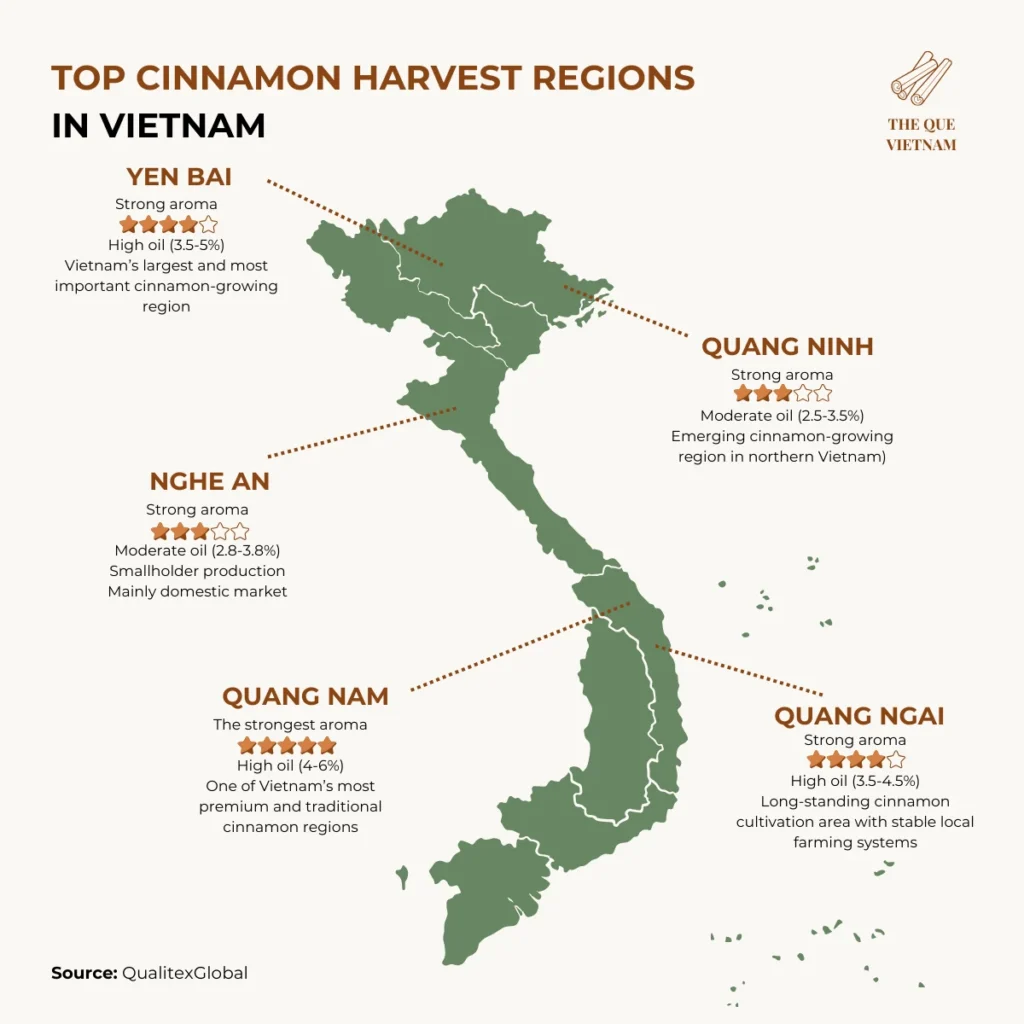
The quality of Vietnamese cinnamon is deeply tied to its terroir. Primary cultivation is concentrated in specific regions known for producing bark with superior oil content and aroma:
-
Northern Mountainous Provinces: Such as Yen Bai and Lao Cai. The cooler altitudes contribute to a robust flavor profile.
-
Central Highland Regions: Including Quang Nam and Quang Ngai. These areas produce cinnamon with a characteristically strong and sweet scent.
Factors like soil mineral content, rainfall patterns, and harvesting traditions in these regions directly influence the bark thickness, color, and potency of the final product, giving Vietnamese cinnamon its distinguished reputation.
3. Key Characteristics & Advantages for Buyers
Vietnamese cinnamon is selected by industrial buyers for specific, measurable qualities that impact end-product performance.
Aroma & Flavor Profile
It is celebrated for its powerful, warm, and sweet aroma—one of the most intense among all cassia types. This boldness ensures the cinnamon flavor remains perceptible even after high-temperature processing, making it highly efficient for food manufacturing.
Physical Structure & Appearance
-
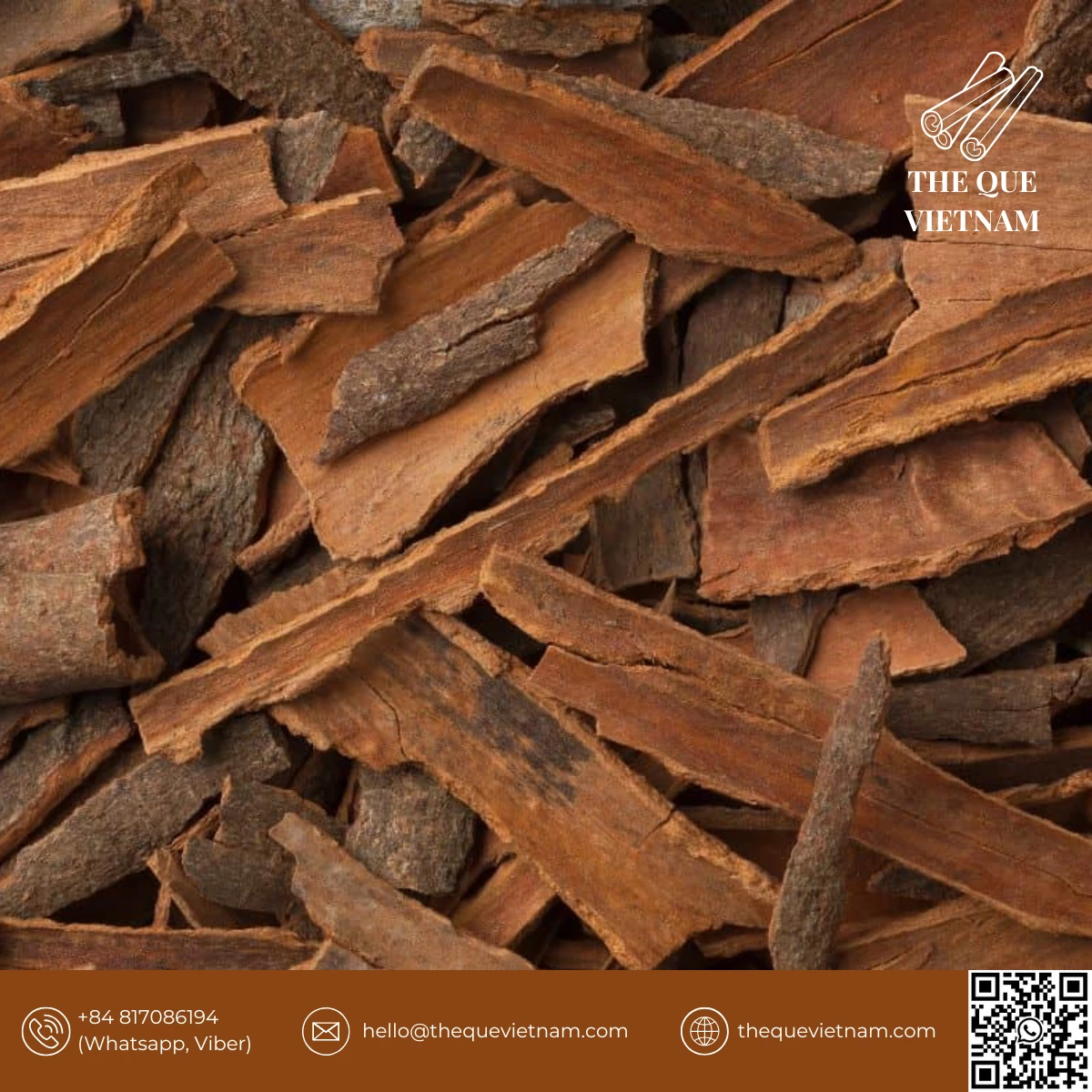
Bark: Notably thicker and harder than other cassias, forming a tight, single-quill curl.
-
Color: A rich, dark reddish-brown.
-
Oil Content: Typically contains a high concentration of essential oils (including cinnamaldehyde), which is responsible for its intense fragrance and flavor potency.
A Note on Coumarin
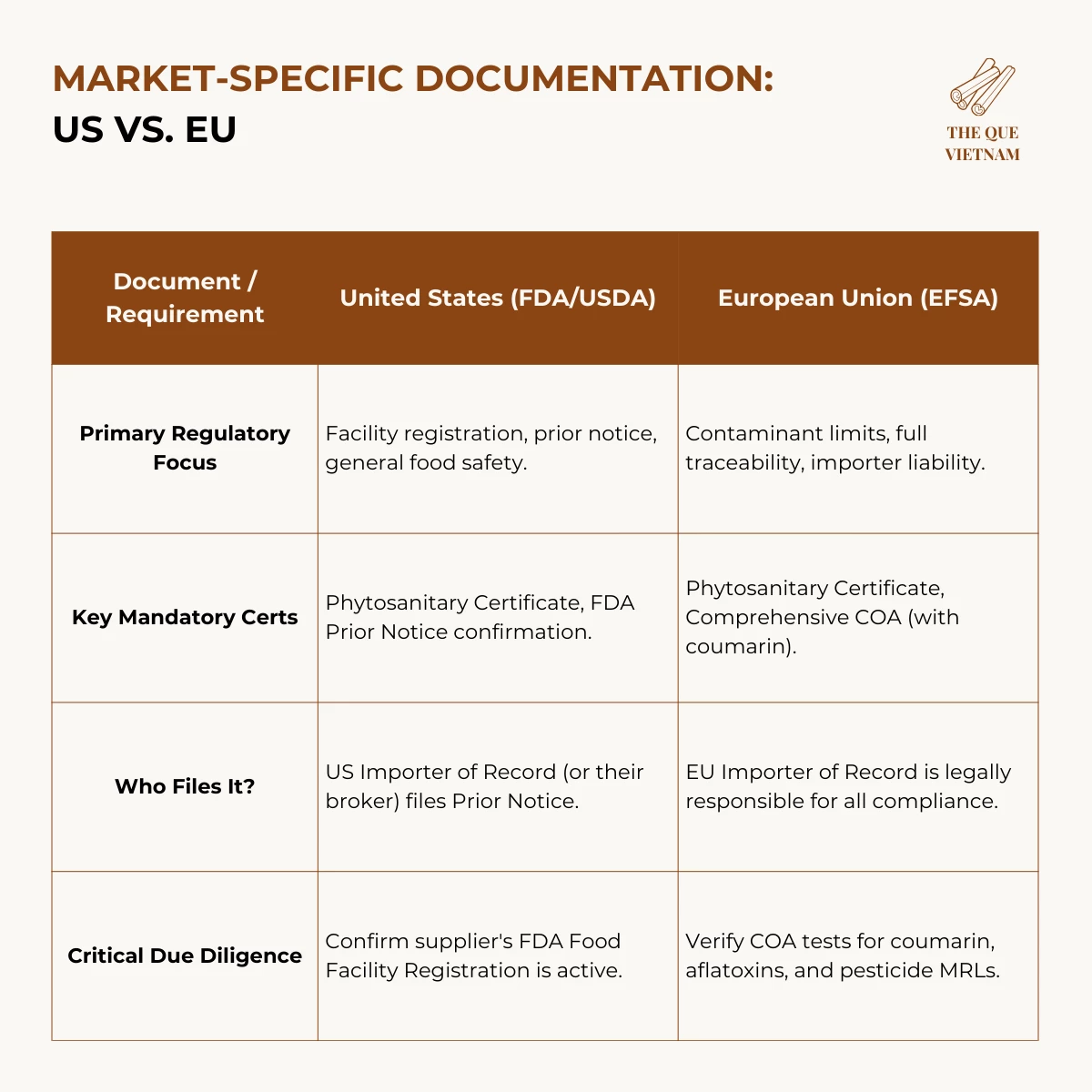
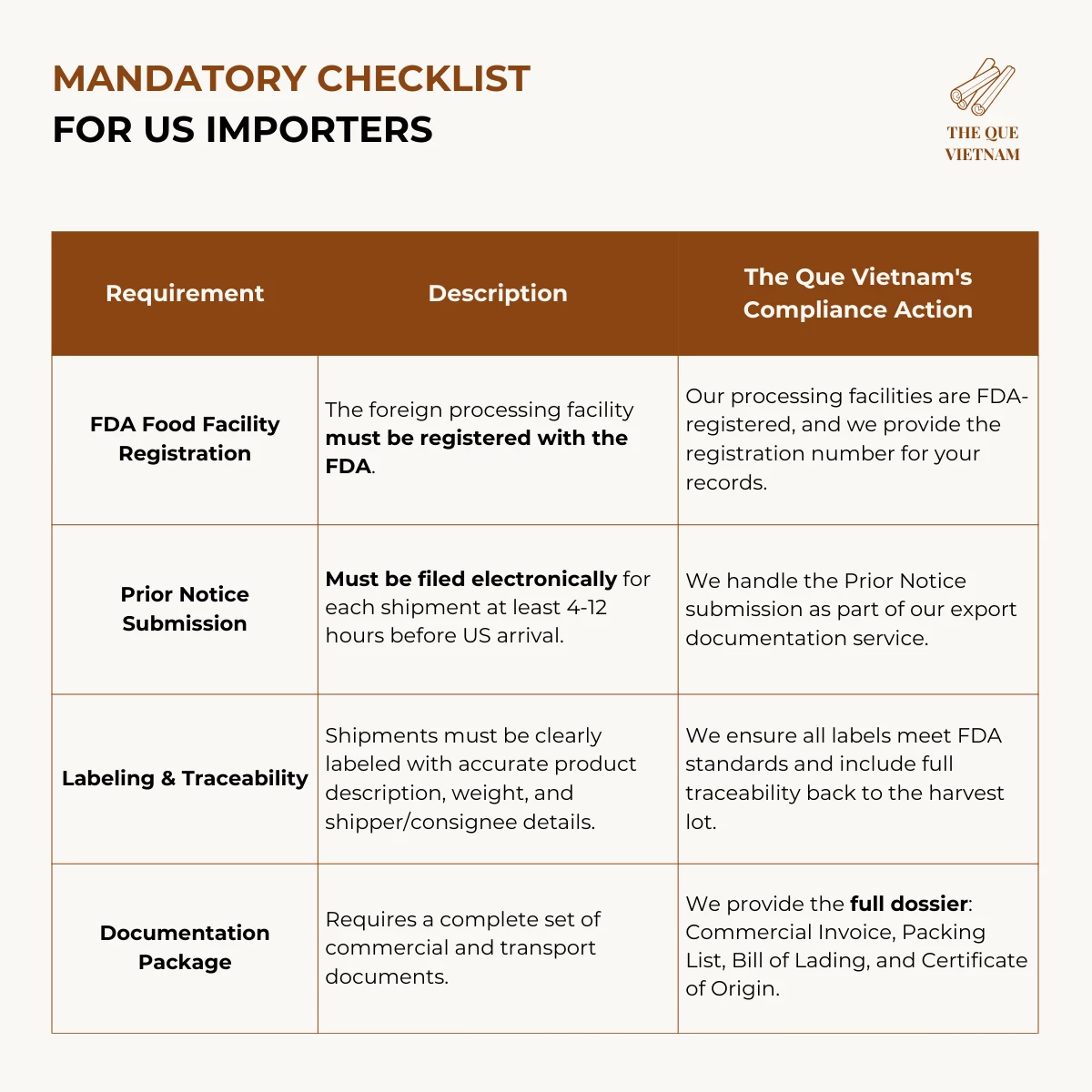
Like all cassia varieties, Vietnamese cinnamon contains naturally occurring coumarin. Reputable exporters, like The Que Vietnam, understand the importance of this for market access, particularly to the EU. We provide products and documentation to help buyers comply with regional food safety regulations.
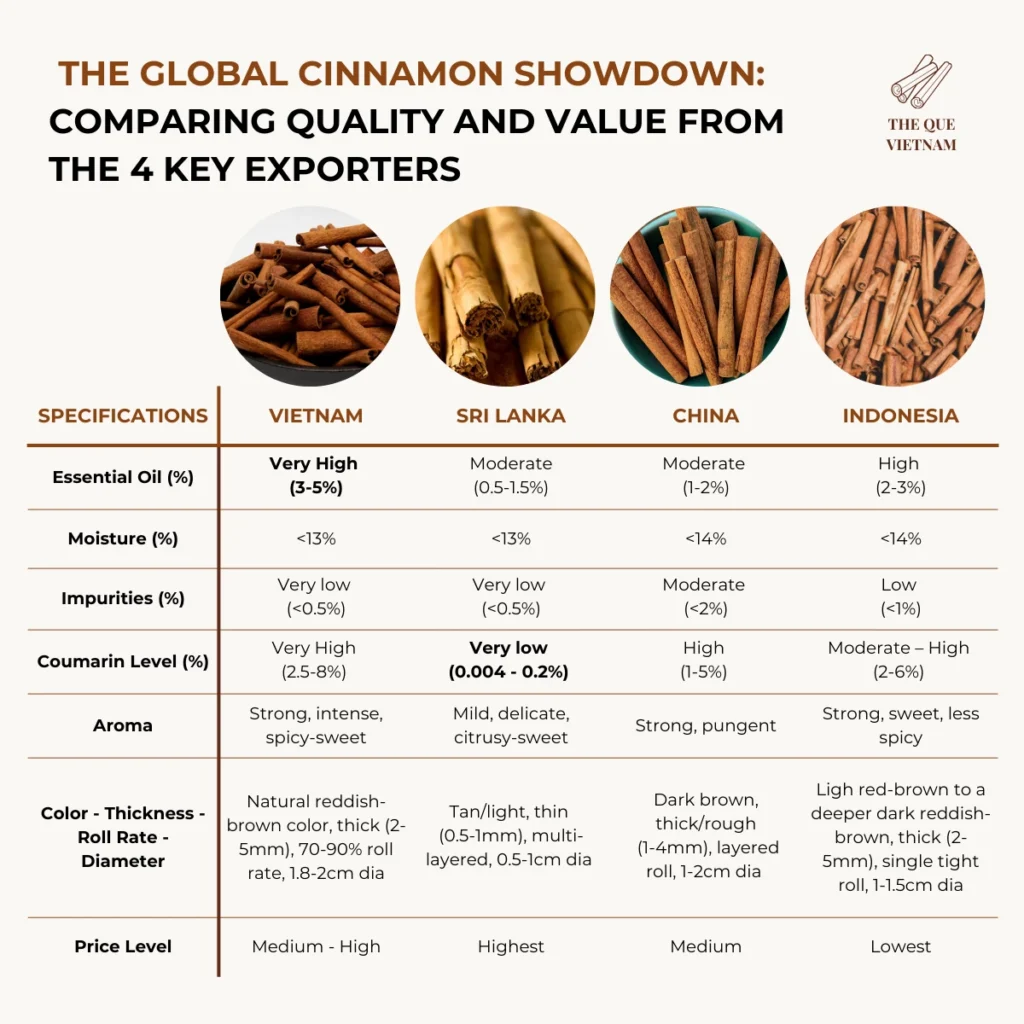
4. Vietnamese Cinnamon vs. Other Major Types: A Buyer’s Guide
For importers, choosing the right type is crucial for cost, formulation, and market positioning. This comparison highlights key trade differences:
5. Common Trade Forms & Global Applications
To meet diverse manufacturing needs, Vietnamese cinnamon is exported in various forms under the harmonized system (HS) code 0906.
-
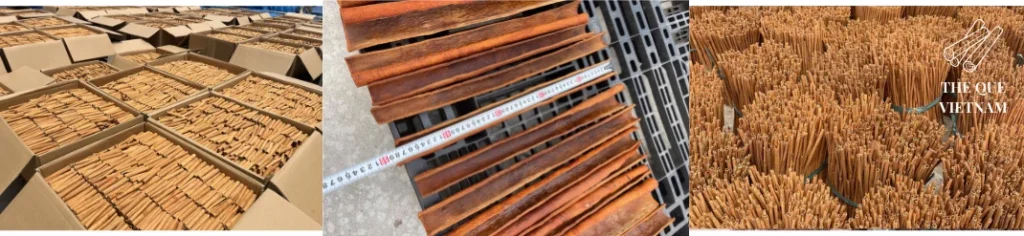
Whole Quills/Sticks: For retail, beverage infusions, and culinary use.
-
Cinnamon Chips/Broken Pieces: Ideal for extraction, tea blending, and grinding.
-
Ground Cinnamon: Millied to specific mesh sizes (e.g., 60-80 mesh) for bakery, confectionery, and spice blends.
-
Cinnamon Powder & Extracts: For specialized food processing and the pharmaceutical industry.
Its robust flavor makes it the preferred choice for:
-
Industrial Baking & Confectionery: Cookies, pastries, cereals.
-
Beverage Production: Flavored coffees, teas, liqueurs.
-
Savoury Food Processing: Seasonings for meats, soups, and sauces.
-
Spice Blending: As the dominant, high-impact note in pre-mixed spices.
6. Why Importers Source from Vietnam
Choosing Vietnamese cinnamon, and a proficient partner within Vietnam, offers strategic supply chain benefits:
-
Scale & Reliability: Vietnam’s established role as a top global producer ensures consistent export availability and the capacity to fulfill large, long-term contracts.
-
Quality Consistency: The concentrated growing regions and standardized processing (when working with a quality-focused exporter) lead to predictable sensory profiles year after year.
-
Established Export Infrastructure: From modern drying facilities to efficient port logistics, the supply chain is optimized for timely, secure international shipment.
Final Perspective: Source with Confidence
Vietnamese Saigon cinnamon is more than a commodity; it’s a consistent, high-impact ingredient that can define the quality of your finished products. Moving beyond generic supplier offers to partner with a knowledgeable, transparent exporter is the key to unlocking its full value.
Ready to specify your requirements?
Contact The Que Vietnam’s sourcing team today for detailed technical specifications, market-compliant documentation, and samples tailored to your application.
Follow The Que Vietnam on Linkedin & Facebook for most updated news!
Vietnamese Cinnamon – Frequently Asked Questions
Vietnamese cinnamon is widely used in food manufacturing, spice blending, and bulk distribution due to its strong aroma and suitability for commercial-scale applications.
Yes. “Saigon Cinnamon” is the commercial trade name for high-quality cassia cinnamon cultivated and exported from Vietnam.
Absolutely. Reputable Vietnamese exporters adhere to international safety standards (HACCP, ISO) and provide necessary documentation (certificates of analysis, material safety data sheets) to ensure smooth customs clearance in all major markets.
How do I choose the right grade for my business?
The optimal grade depends on your application (retail, grinding, extraction), desired flavor intensity, and budget. Consulting directly with a technical sourcing expert is the most efficient path.