Saigon cinnamon specifications refer to the measurable quality parameters importers must define when sourcing export-grade Vietnamese cassia. The most critical specifications include moisture content (maximum 13.5%), essential oil content (typically 3.0–5.5%), physical form and cut type (whole sticks, broken, or powder), roll rate and size tolerances, and chemical compliance requirements such as coumarin and pesticide limits. Clearly defining these specifications in contracts ensures product consistency, regulatory compliance, and protection against quality disputes in international trade.
Saigon Cinnamon Specifications Explained: Moisture, EO% & Export Standards for Importers
For international buyers, sourcing Saigon cinnamon effectively requires moving beyond origin claims and into the realm of definitive technical specifications for export-grade Saigon cinnamon from Vietnam. These measurable parameters are what separate a consistent, high-performing ingredient from a commodity prone to quality disputes and supply chain failures.
This guide details the critical specifications you must define when sourcing export-grade Saigon cinnamon from Vietnam, providing you with the exact benchmarks used by professional food manufacturers and spice processors to ensure reliability from shipment to shipment.
1. From Origin to Contract: Why Specifications are Your Legal Quality Guarantee
While “Saigon Cinnamon” confirms the origin, specifications define the usable product. They translate geographical reputation into enforceable contract terms. Clear, measurable specs allow you to:
-
Objectively assess supplier capability and technical proficiency.
-
Ensure batch-to-batch consistency in your manufacturing process.
-
Mitigate financial risk by providing grounds for claim if shipments deviate from the agreed standard.
-
Streamline customs clearance with accurate, verifiable product documentation.
For professional procurement, specification clarity is not administrative—it’s a core commercial safeguard.
Internal Link: To understand how these specifications are achieved, see our guide on How Vietnamese Cinnamon is Processed for Export.
2. Critical Control Point #1: Moisture Content (Target: ≤13.5%)
Moisture content is the primary determinant of shelf stability and microbial safety during transit and storage.
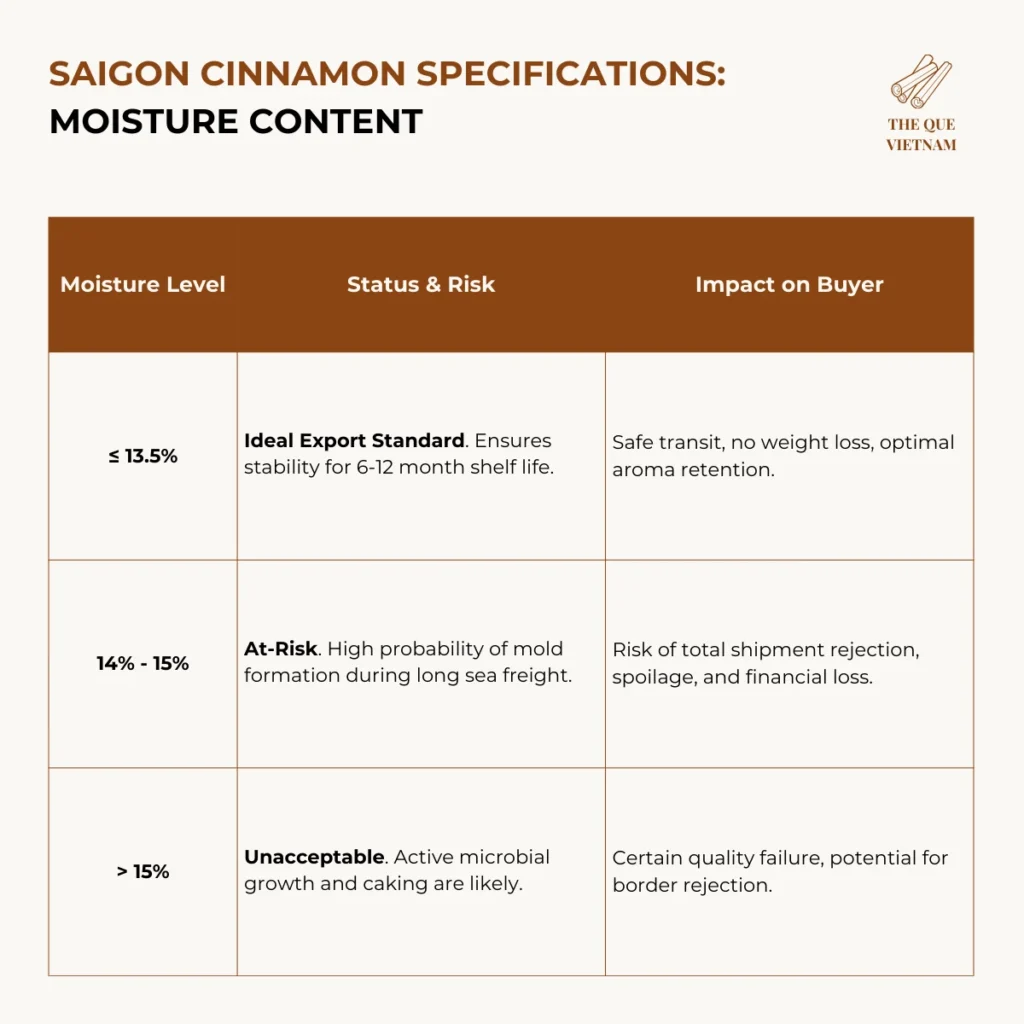
How to Verify: Insist on a moisture test from the supplier for each batch. For high-value contracts, specify third-party verification at the loading port.
Importer takeaway: Moisture content is the first parameter customs inspectors and QA labs assess. If this fails, all other quality metrics become irrelevant.
3. The Flavor Benchmark: Essential Oil Content (EO%)
Essential Oil (EO) content is the scientific measure of the cinnamon’s potency, aroma strength, and flavor intensity. It directly correlates with the concentration of cinnamaldehyde.
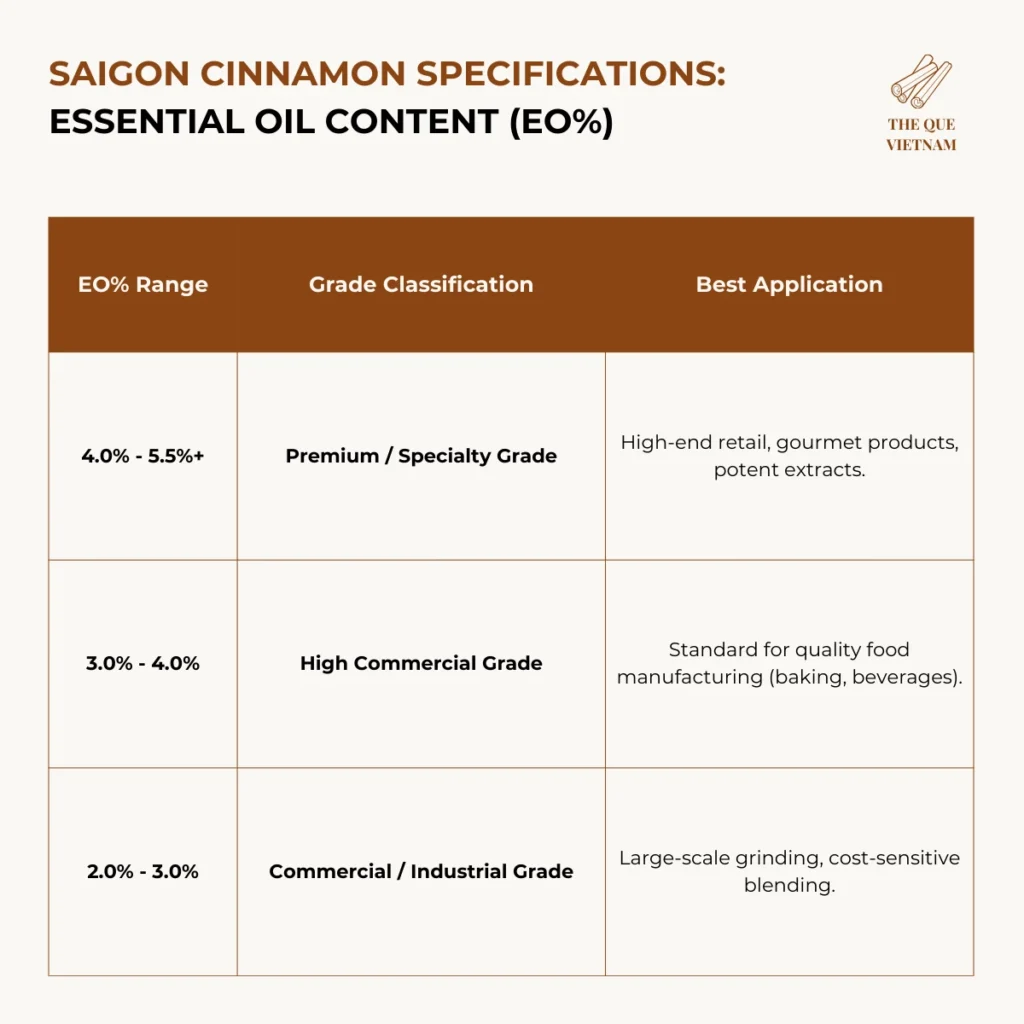
Pro-Tip: EO% is influenced by origin and harvest timing. Cinnamon from Quang Nam (Tra My) consistently achieves the higher end of the scale (4%+), while Yen Bai offers reliable volume in the 3-4% range. Always correlate the EO% specification with the origin in your contract.
In commercial negotiations, EO% often explains 30–50% price variance between two visually similar cinnamon lots.
Internal Link: For a complete breakdown of grades tied to EO%, read our definitive guide on Vietnamese Cinnamon Grades Explained.
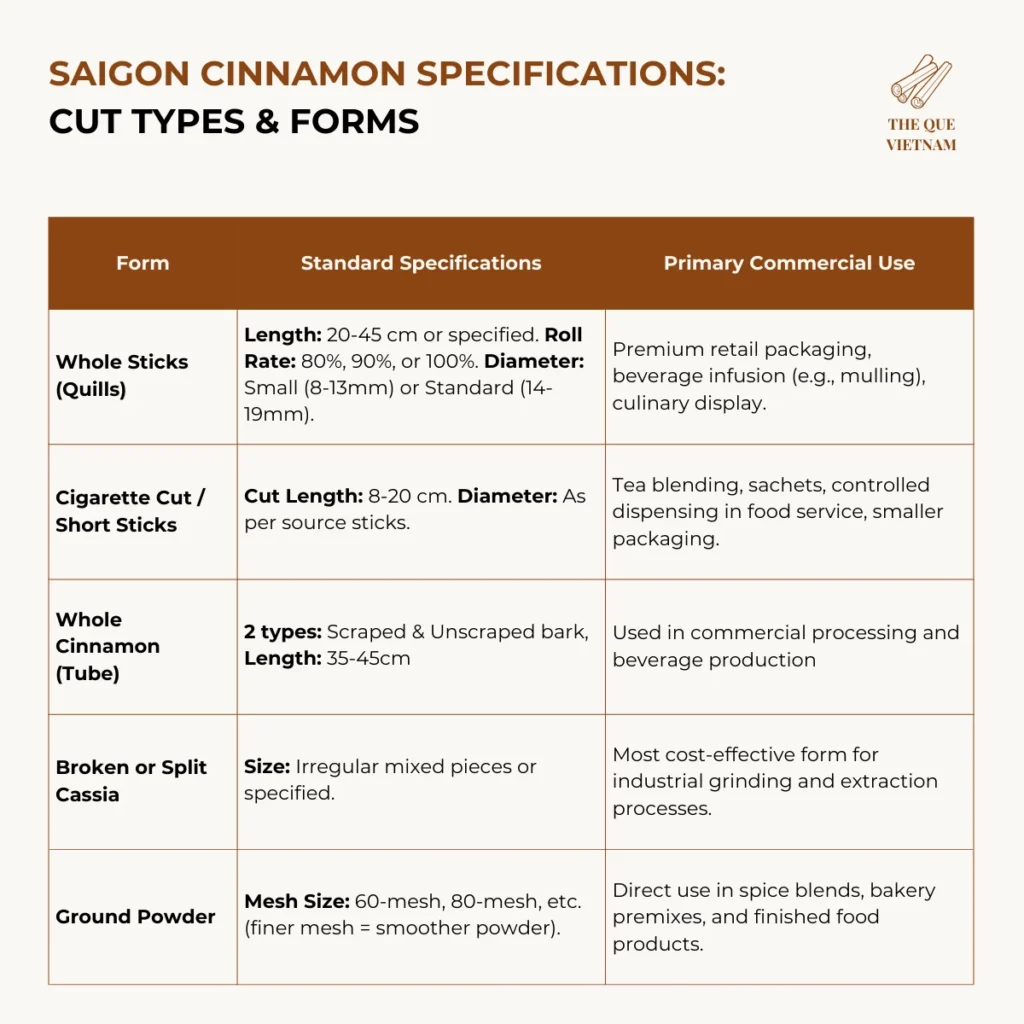
4. Cut Types & Forms: Matching Physical Form to Function
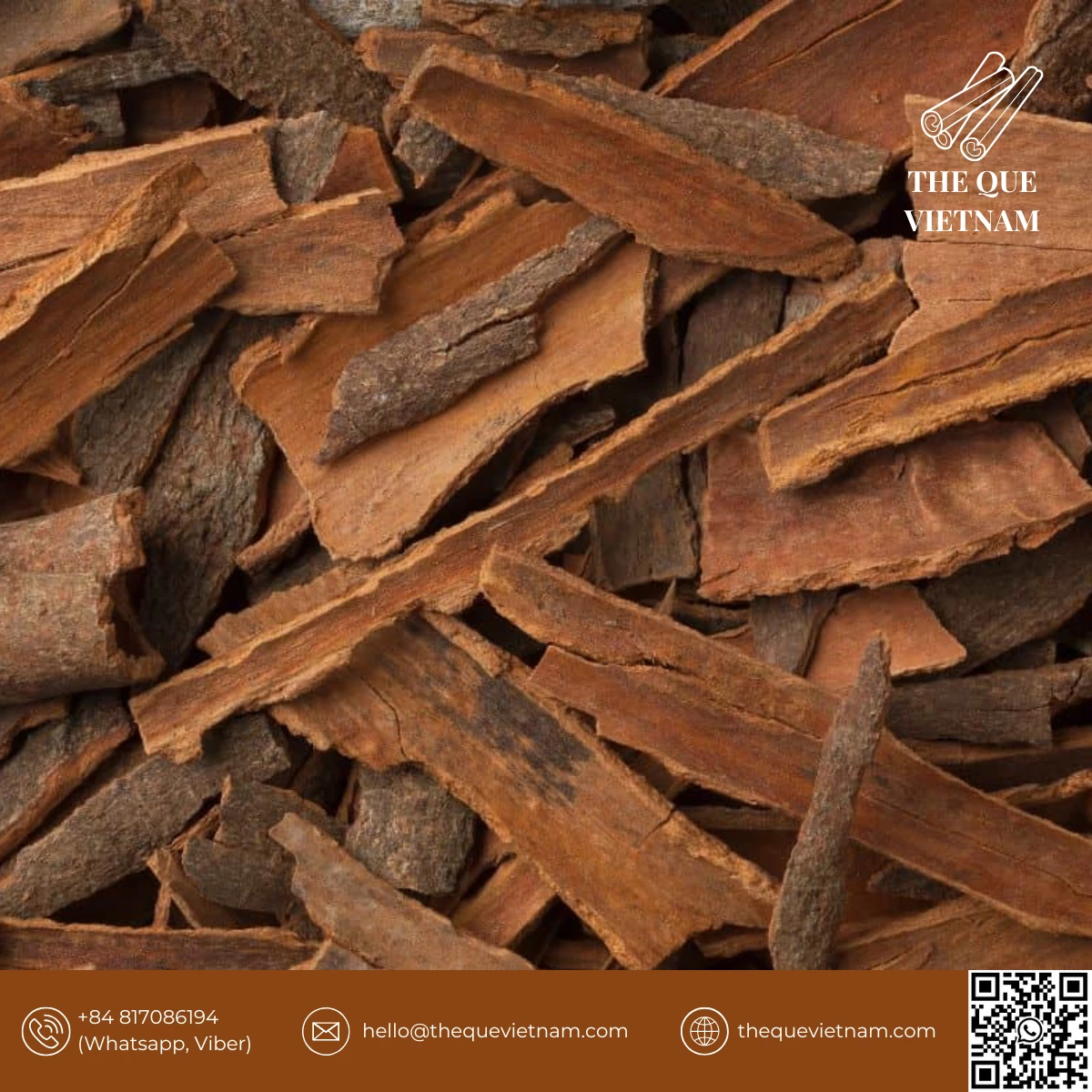
The physical preparation of Saigon cinnamon significantly impacts its use, packaging efficiency, and cost. Choose the form that aligns with your production line.
5. Defining Tolerances: The Real-World Language of Specifications
Commercial specifications account for natural variation. Clearly defined tolerances prevent disputes. Your purchase agreement should specify acceptable ranges for:
-
Moisture Content: e.g., “13.5% maximum” or “12.5% ± 0.5%”.
-
Size Uniformity: e.g., “90% of sticks to fall within 10-12cm length.”
-
Purity / Defect Limits: e.g., “Foreign matter < 0.1%” or “Insect damage < 1%”.
-
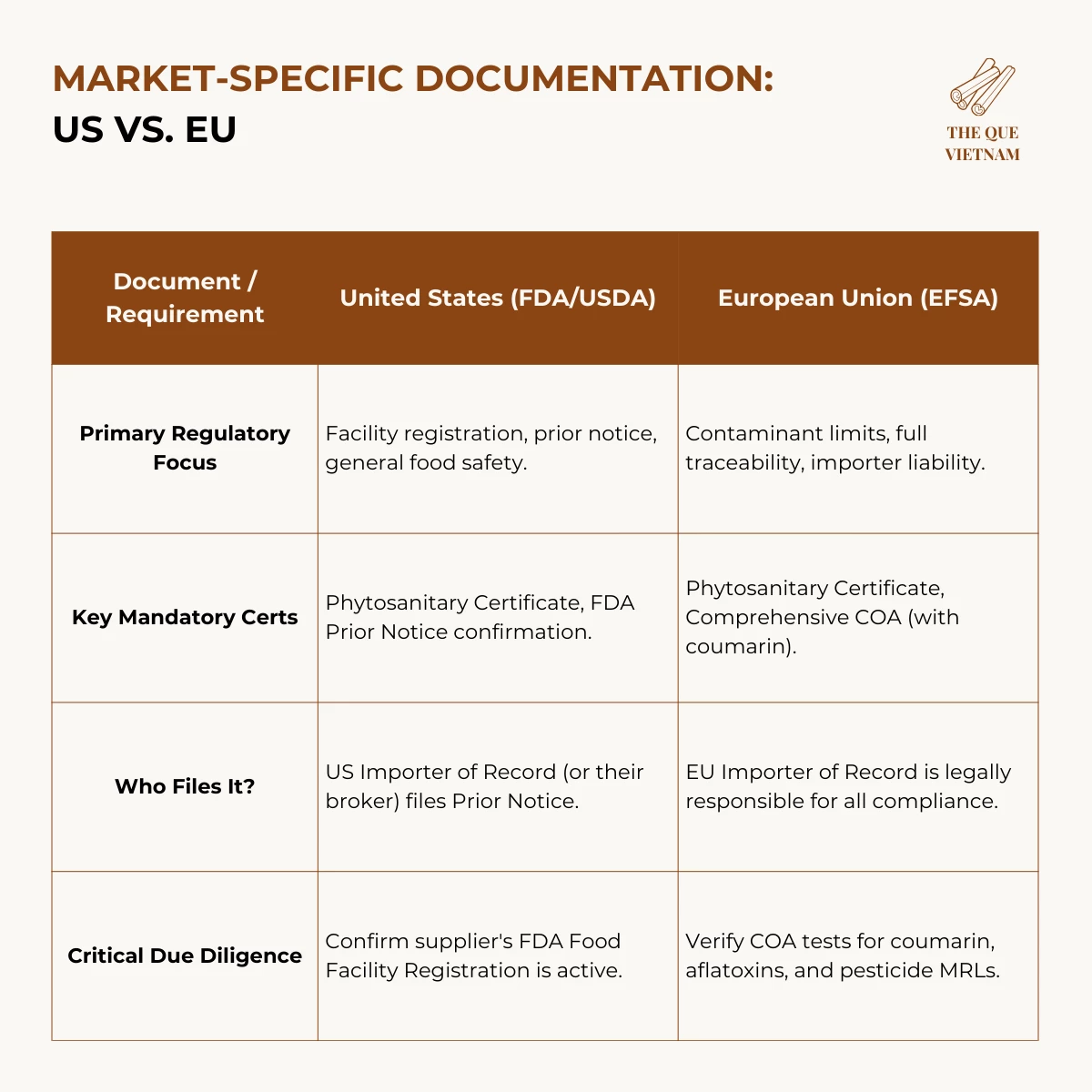
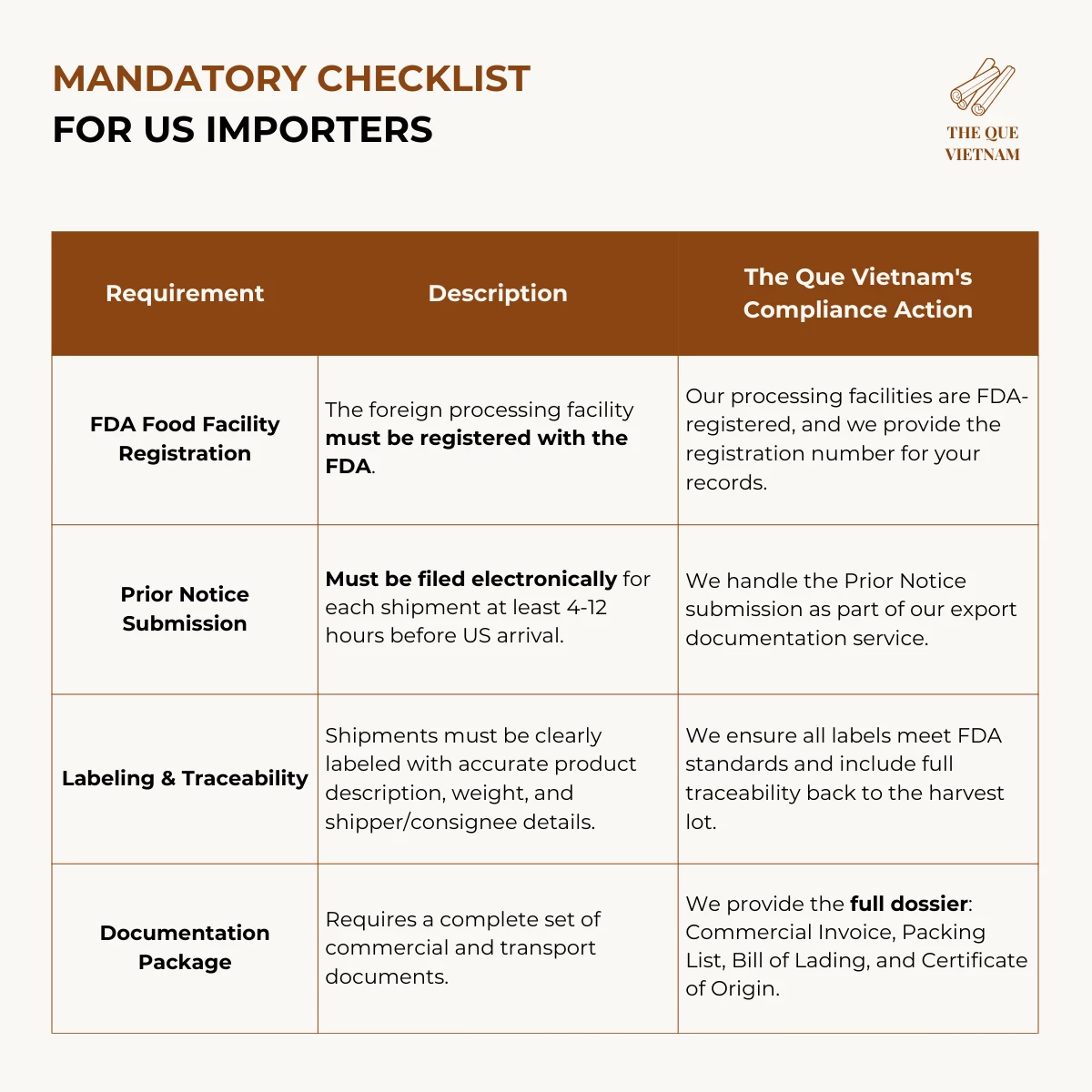
Chemical Residues: Must meet destination market limits (e.g., EU, USA FDA). Your supplier must provide a Certificate of Analysis (CoA) for pesticides and heavy metals.
Most quality disputes arise not from defects, but from undefined tolerances.
6. From Specification to Shipment: A 3-Step Importer Compliance Framework
Well-defined specifications are useless without verification. Implement this 3-step compliance process:
-
Pre-Shipment Sample Approval: Before production, approve a sample that meets all physical and aroma specs. This sample becomes the contract’s quality benchmark.
-
In-Process Quality Checks: For large orders, stipulate the right for your agent or a third-party inspector to verify moisture and processing at the factory.
-
Final Document Review: Do not release payment until you receive and verify the full export document pack, including the final CoA, phytosanitary certificate, and moisture analysis for the shipped batch.
Final Perspective for Importers
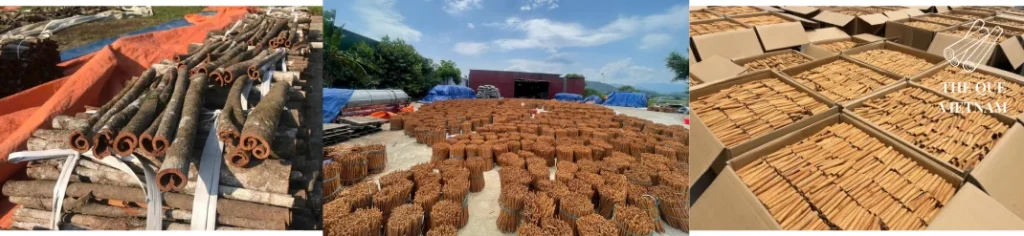
Export-ready cinnamon is the result of meticulous, controlled processing—not chance. Choosing a Vietnamese supplier who masters these stages—from precision drying to grading transparency and export-compliant packing—is your strongest leverage against quality disputes and supply chain headaches.
Ready to specify your needs with a supplier who details this process? Contact The Que Vietnam’s sourcing team for technical datasheets and samples that match your exact grade and application.
Follow The Que Vietnam on Linkedin & Facebook for most updated news!
Frequently Asked Questions
A: The Pre-Shipment Sample Approval and Specification Sheet. This signed document, detailing all agreed specs (EO%, moisture, size, origin) for the exact batch, is your enforceable legal benchmark for quality.
A: Coumarin levels. EU Regulation (EC) No 1334/2008 sets strict limits. You must work with a supplier who can provide a coumarin-specific Certificate of Analysis to prove compliance and avoid border rejection.
A: Absolutely, and you should. Always request a production sample from the exact harvest lot. For ultimate security, contract a pre-shipment inspection by a firm like SGS or Bureau Veritas to verify the bulk goods match the sample.
A: Use precise, measurable language in your RFQ:
*”We require Saigon Cinnamon, Yen Bai origin, with minimum 3.5% EO, maximum 13.5% moisture, in 80% roll rate whole sticks (10-12cm). Full lab CoA for coumarin and pesticides required for EU compliance. Payment subject to independent verification.”*