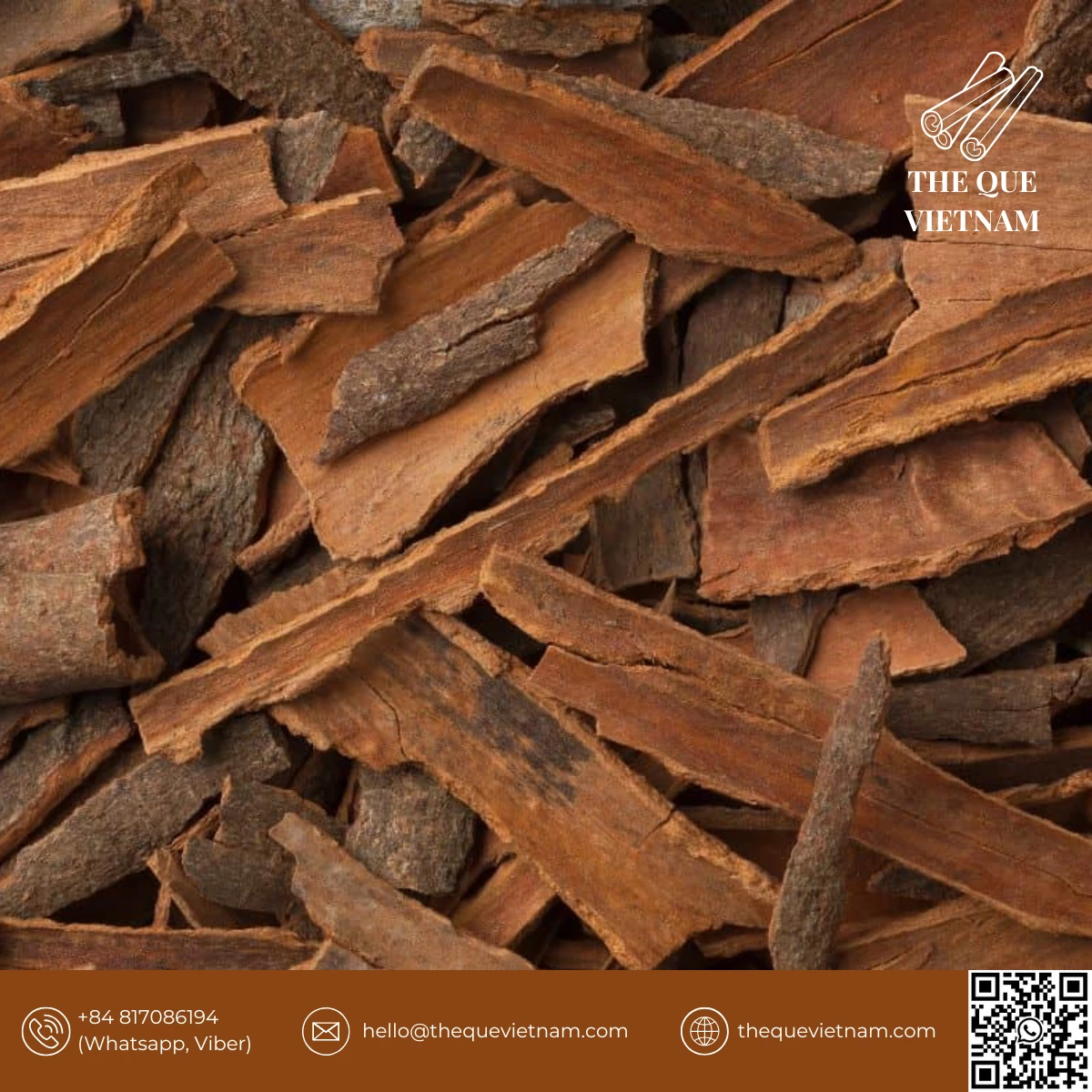
Vietnamese cinnamon grades are defined primarily by essential oil content, physical quality & aesthetics (thickness, diameter, roll rate), moisture & dryness. These grades help importers specify quality, manage pricing, and ensure consistent performance across food manufacturing, retail, and extraction applications.
Vietnamese Cinnamon Grades Explained: EO%, Roll Rate & Export Quality Standards Importers Must Know
Stop guessing about cinnamon quality.
For professional food manufacturers, spice blenders, and bulk cinnamon importers, vague labels like “Grade A” or “Premium Cassia” are meaningless—and risky.
In Vietnam’s export industry, real cinnamon grading is defined by measurable chemistry, physical structure, and processing discipline. This guide breaks down the actual specifications used by serious exporters to distinguish true Saigon cinnamon from commodity-grade cassia.
If you source cinnamon for food manufacturing, extraction, or branded products, this is the blueprint your procurement and QA teams need.
What You’ll Learn In This Guide:
-
The single chemical metric that determines up to 70% of cinnamon value
-
The physical grading factor that adds USD 200–300/MT
-
How to write a sourcing specification that prevents disputes
-
Which Vietnamese growing region fits your quality and volume needs
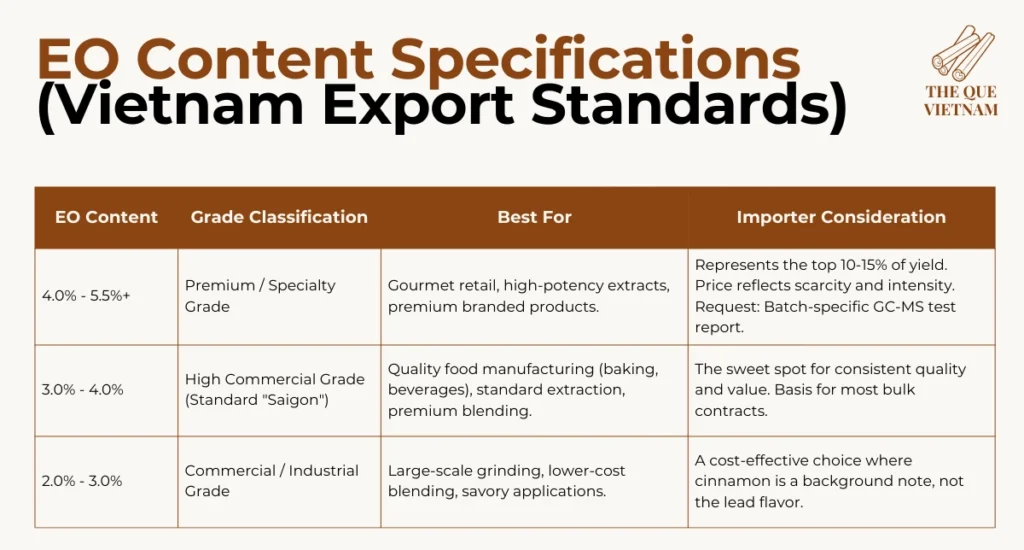
1. Essential Oil (EO%) — The Core of Cinnamon Quality
Essential Oil (EO) content is the primary determinant of aroma, flavor intensity, and commercial value in Vietnamese cassia cinnamon.
It measures volatile compounds—primarily cinnamaldehyde—and directly impacts product performance in food, beverages, and extraction.
Strategic Sourcing by Origin
-
For Peak Potency (EO >4%): Specify Quang Nam (Tra My) origin. The unique microclimate produces bark with the highest recorded oil content, defining the true “Saigon Cinnamon” profile. Supply is limited and premium-priced.
-
For Consistent Bulk (EO 3-4%): Yen Bai province is Vietnam’s volume leader. It offers reliable, large-scale supply with stable quality, ideal for securing annual contracts for food manufacturing.
🛡️ Buyer Protection: Essential Oil content can depreciate with poor storage or aging. Insist on a fresh crop certificate and a Certificate of Analysis (CoA) from an ISO-accredited lab (e.g., SGS, Eurofins) for the exact shipment lot.
2. Physical Grades: Thickness, Diameter & Roll Rate
Physical grading affects visual appeal, processing yield, and aroma retention—especially important for retail and branded products.
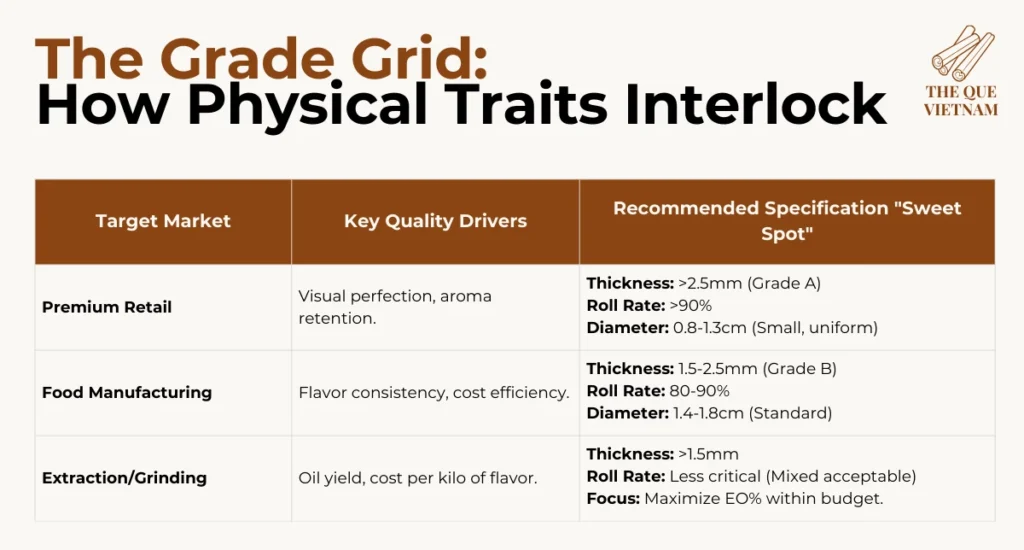
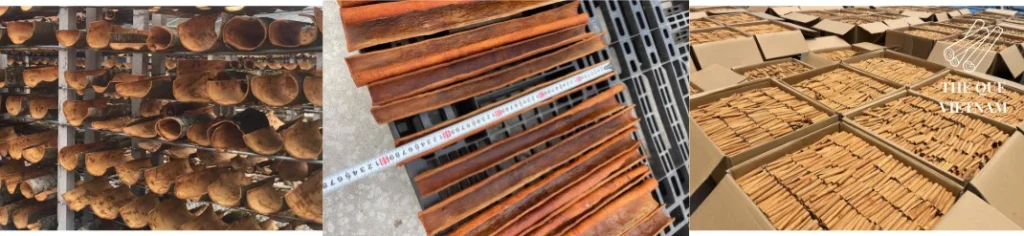
Why Roll Rate is a Price Benchmark: The Roll Rate measures the percentage of sticks forming complete tubes. High roll rate indicates meticulous hand-rolling, which better seals in aroma. An increase from 80% to 90% roll rate typically increases cost by $200-$300 per metric ton (MT) due to the added labor and selective grading.
Internal Link: To understand how these grades are achieved, read our guide on How Vietnamese Cinnamon is Processed for Export.
3. Processing Integrity: Moisture & Final Inspection
This is where quality is secured or lost before shipment.
Critical Control Point: Moisture Content
-
Acceptable Export Range: 12.0% – 13.5%.
-
The Risk Window: Moisture above 14% invites mold growth and enzymatic degradation during transit. Moisture below 12% makes bark brittle, causing breakage and powdering.
-
Pro Insight: Demand suppliers use computer-controlled kiln dryers, not just sun-drying, for uniform results unaffected by weather.
The Visual Checklist: Inspecting the Actual Shipment Lot
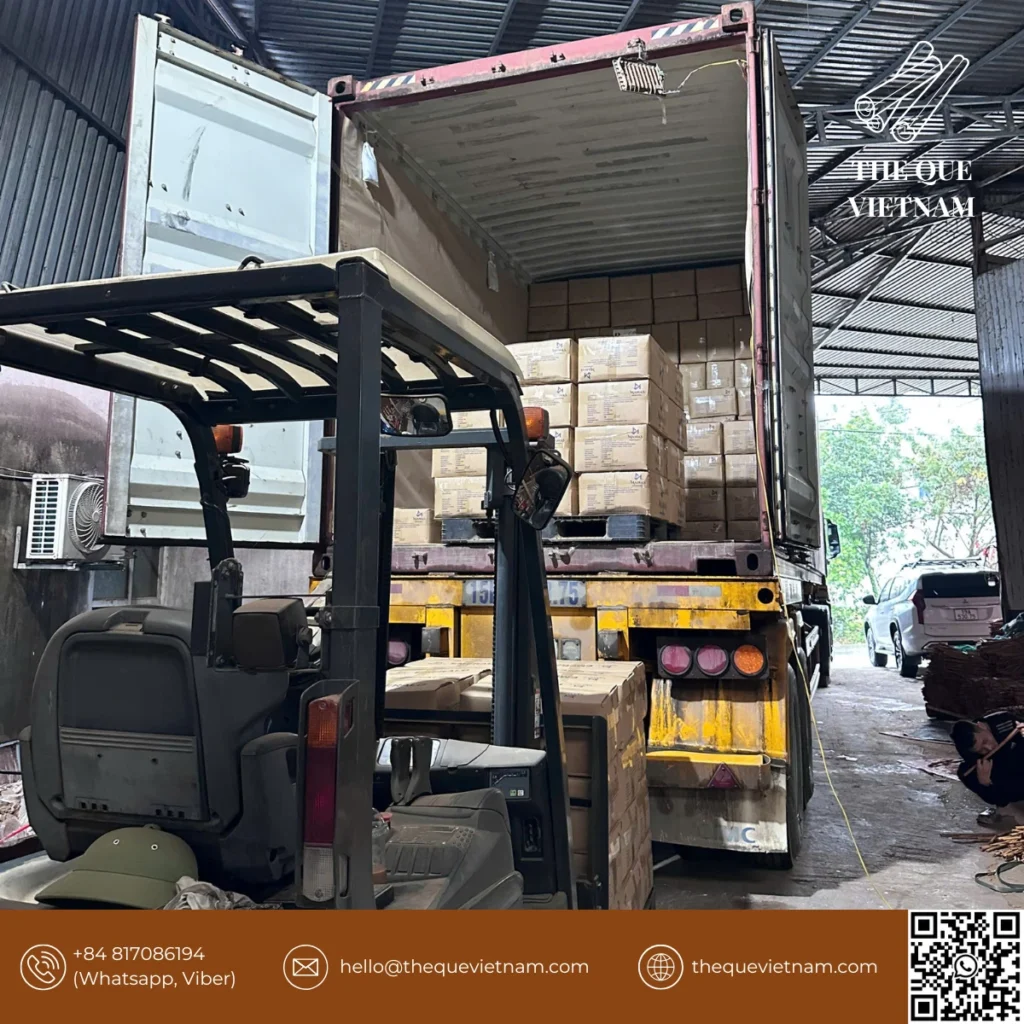
Do not judge by a “showroom sample.” Require actual shipment footage. Look for:
-
Color: Uniform reddish-brown (not dull grey or black-spotted).
-
Cleanliness: No visible sand, dust, or foreign material.
-
Consistency: Sticks within the same bag conform to the stated grade.
Matching Grade to Application & Budget
Choosing the right grade is a strategic cost-management decision.
-
For Retail Whole Sticks: Premium (AA) or Grade A is essential for visual appeal and customer perception.
-
For Food Manufacturing (Baking, Beverages): Grade B typically offers the optimal balance of potent flavor and cost-effectiveness for processing.
-
For Grinding or Extraction: Industrial Grade can be excellent, provided aroma strength is maintained. The visual perfection of sticks is less critical here.
-
Common Mistake: Paying for Premium AA when your grinding process will reduce it to powder, or opting for a low-grade cinnamon that fails to impart enough flavor in your finished product.
Higher grades typically command higher pricing due to increased bark thickness, oil concentration, and visual uniformity, while lower grades offer cost efficiency for processing applications.
How to Specify Grades and Work with Suppliers
Precision in your Request for Quotation (RFQ) prevents problems. Always specify:
-
Intended Application: e.g., “for retail stick packaging” or “for grinding into bakery spice mix.”
-
Grade Name or Minimum Thickness: e.g., “Grade A / B, minum 1.2mm thickness.”
-
Form Required: Whole sticks, cigarette cut (specify length), broken pieces, or powder (specify mesh size).
-
Key Parameters: “Moisture content below 12%” and “strong, characteristic Saigon cinnamon aroma.”
-
Always Request Pre-Shipment Samples: Physically evaluate the exact material that will be shipped against your specifications.
Your Action Plan: From Reading to Sourcing
1. Audit Your Current Supply: Compare your last shipment’s documentation against the metrics above. Identify your quality gaps.
2. Redefine Your RFQ: Use the specification table in Section 2 to build your next purchasing requirement.
3. Partner with a Technical Exporter: Move from a transaction-based relationship to a partnership with a supplier who educates you and provides data.
Partner with The Que Vietnam for Data-Backed Sourcing
We equip importers with the tools to buy confidently. When you partner with us, you receive:
-
Origin-Guaranteed Spec Sheets: Lot-specific data on EO%, moisture, and grade dimensions.
-
Third-Party Lab Certificates: Optional independent verification from internationally recognized labs.
-
Pre-Shipment Video Inspection: Visual confirmation of the exact goods before they sail.
-
Strategic Sourcing Advice: Guidance on choosing the optimal origin and grade for your application and budget.
📥 Get Your Custom Sourcing Package
Contact Our Technical Sourcing Team to receive:
-
Our detailed Vietnamese Cinnamon Grade Specification PDF.
-
Sample kits from our Quang Nam (High-EO) and Yen Bai (Stable-Bulk) lines.
-
A consultation to map your needs to the correct grade.
The Que Vietnam provides detailed grade specifications and samples upon request.
Follow The Que Vietnam on Linkedin & Facebook for most updated news!
This version is designed to be the most practical and authoritative guide on Vietnamese cinnamon grades available online, directly serving your buyers’ needs and positioning your company as the expert partner.
Frequently Asked Questions
A: No, there is no single universal standard. Grading is often based on regional practices and supplier criteria. This makes clear specification and sampling even more critical when sourcing.
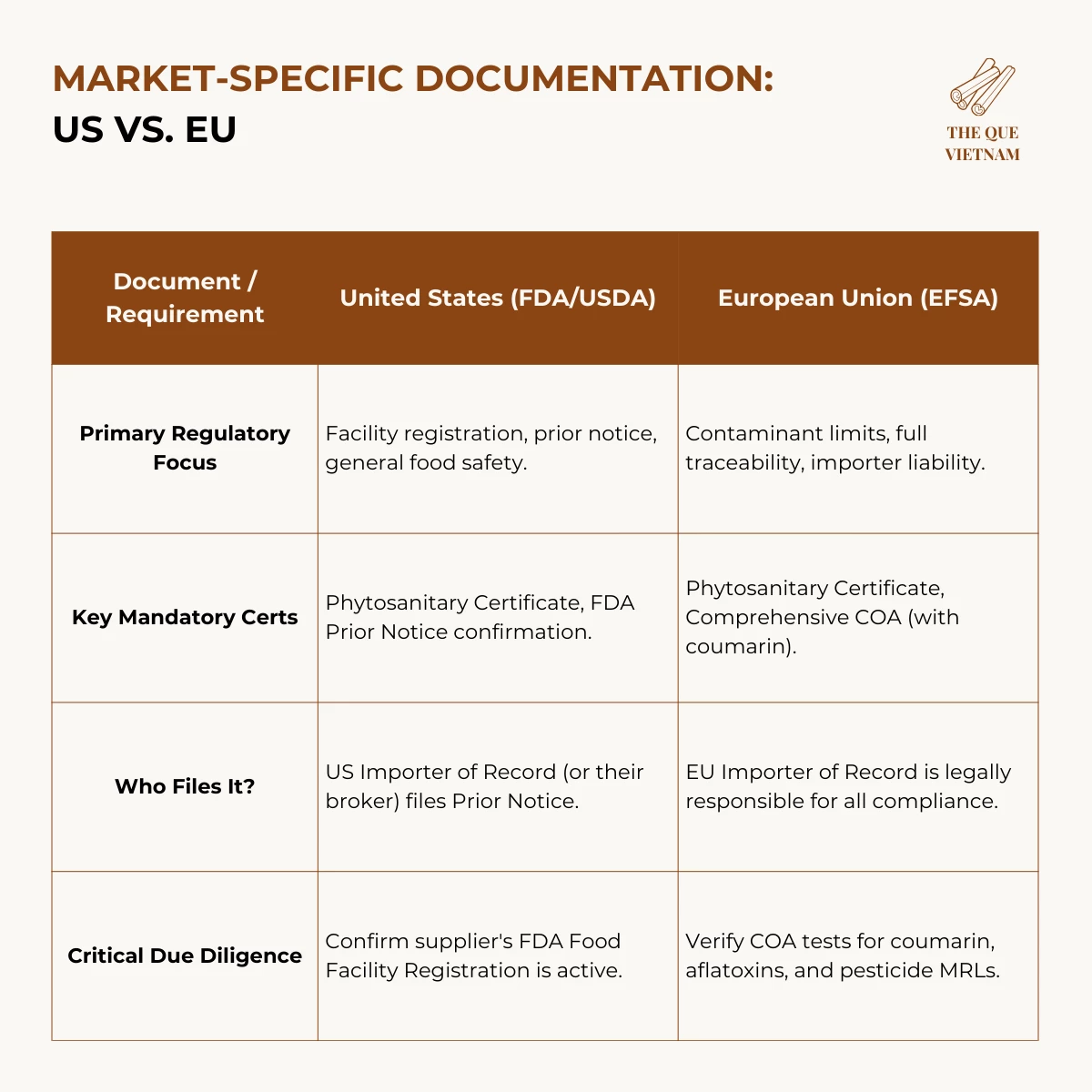
A: Generally, thicker, more potent bark (like Premium grades) contains higher levels of essential oils and coumarin. If complying with EU coumarin regulations is a concern, discuss this explicitly with your supplier, who may provide test results or recommend specific grades.
A: Work with suppliers who have robust internal Quality Control (QC). Consistency is achieved through strict adherence to grading protocols at processing, not just final sorting. Ask about their QC process.
A: No. “Saigon Cinnamon” denotes the origin and type (Vietnamese Cassia). Within Saigon Cinnamon, there are multiple grades (AA, A, B, etc.). A supplier should specify both.
Q: How do I avoid being misled by generic “Grade A” claims?
A: Replace subjective terms with objective, measurable requirements in your Request for Quotation (RFQ):
“We require cinnamon with minimum 3% Essential Oil, thickness >2mm, cigar cut 10cm long, 1.9cm diameter, 90% roll rate, maximum moisture 13.5%. Payment subject to independent lab verification against these specs.”
Q: For EU compliance, how does grade relate to coumarin levels?
A: Coumarin content is correlated with EO%—higher-potency cinnamon generally has higher coumarin. If supplying the EU market, you must work with a supplier who can provide a coumarin-specific CoA to ensure compliance with EU Regulation (EC) No 1334/2008.